What opioid addiction can look like before anyone says the word “addiction”
A family may hear “my back hurts,” “it was prescribed,” “I have it under control,” or “it’s not like heroin.” But addiction shows up less in the explanation and more in the repeating pattern.
Physical signs
Nodding off, slow speech, heavy sleep, tiny pupils, nausea, itching, unsteady walking, unusual calm, strange exhaustion or breathing that feels slower than it should.
Behavioral signs
Locked phone, missing money, disappearing, vague stories, pills going missing, last-minute emergencies, pressure for cash and a lot of explanations that almost make sense.
Withdrawal pressure
Body aches, sweating, chills, diarrhea, anxiety, insomnia, irritability and a desperate need to take something again — often not to feel high, but to stop feeling sick.
Mixed-use danger
Opioids with alcohol, benzos, sleeping pills, stimulants or unknown street drugs can turn a “normal” night into an unpredictable medical emergency.
Opioid addiction is a cycle, not just a substance
Families often try to win the argument. But the cycle is not broken by winning a conversation. It is held together by pain, withdrawal, access, shame, money and fear.
Why this page is not a duplicate of nearby opioid pages
This page owns one clear search intent: recognizing opioid addiction and the family risk pattern. It is not a treatment page, not a detox page, and not a heroin-only page.
Not an opioid treatment page
The treatment page will focus on the route of help: provider coordination, privacy, logistics, licensed professionals and recovery planning. This page explains how the addiction shows up.
Not an opioid detox page
Detox is about withdrawal, stabilization and medical safety. This page is broader: signs, family behavior, risk and the moment when improvising stops working.
Not only heroin
Heroin deserves its own page. This page covers the wider opioid pattern: heroin, methadone, tramadol, fentanyl, oxycodone and pain pills.
Not only overdose
Overdose is an emergency topic. Here it appears as a major red flag inside the larger opioid addiction picture.
The medical and legal boundary
With opioids, the boundary has to be strict. Breathing, consciousness, overdose, detox, medication and diagnosis are not family-management issues. They belong to licensed medical care.
Licensed professionals
Diagnosis, medical assessment, detox, medication, psychiatric evaluation, emergency care and clinical decisions.
DIAMANT HOUSE
Private route coordination, logistics, translation, medical tourism, family communication, confidentiality and recovery planning.
Mistakes that keep the opioid cycle alive
Most families are not careless. They are scared. But some “protective” moves lower the noise for one day and strengthen the addiction for the next month.
Believing the post-crisis promise
The person may mean it. But withdrawal, access, shame, old contacts and panic can pull them back before the family has even exhaled.
Paying for silence
Covering debt or handing over cash without a plan may stop the conflict today while quietly funding tomorrow’s crisis.
Calling heavy sedation “sleep”
With opioids, extreme sleepiness, slow breathing or being hard to wake can be a danger sign — not a peaceful rest.
Choosing reputation over emergency care
Privacy matters. But if breathing, consciousness or overdose is involved, discretion cannot come before medical help.
Privacy, reputation and medical tourism in Israel
For some families, privacy is the only reason they are willing to act. Children, business, public image, immigration, professional status or fear of exposure can keep people frozen until the risk becomes dangerous.
Limited information circle
Only the people needed for safety and coordination should know details. Too many voices can turn action into panic.
Distance from the old setup
A route in Israel can create distance from contacts, debt pressure, access to drugs and the same home fights that restart the cycle.
Quiet logistics
Arrival, translation, family communication, privacy and medical tourism support are organized as one route.
Three languages
Coordination is possible in English, Russian and Hebrew for families in Israel and abroad.
The family’s role: stop being the detective, bank and night guard
A family cannot police opioid addiction into recovery. The job is to create a clear line: what is urgent, what will not be solved with money, who needs to know and what happens if overdose signs appear.
- Write facts, not theories. Known or suspected opioid, last use, breathing, unconsciousness, withdrawal, mixed use, debt, aggression, disappearances and current safety risk.
- Do not argue during intoxication or withdrawal panic. If the person is sedated, confused, aggressive or desperate, logic may not reach them.
- Do not buy quiet. Money without boundaries and a route can become part of the addiction’s operating system.
- Do not handle danger alone. A private route does not mean waiting at home when breathing or consciousness is at risk.
What to do when the pattern is already repeating
The first step is not blame. The first step is separating urgent medical risk from family confusion, then building a route that fits the real situation.
If there are red flags
Slow breathing, being hard to wake, unconsciousness, seizures, severe confusion or suspected overdose means emergency medical help first.
If the crisis keeps coming back
The family needs a private route: situation review, medical boundaries, privacy, family alignment, logistics and a plan beyond the first calm day.
Opioid addiction is not only about the drug. It is about the system that starts running the house.
Pain, withdrawal, money, shame, access and fear of exposure can slowly turn the whole family into part of the loop.
A discreet route in Israel can create distance, protect privacy, involve licensed professionals when needed and help the family plan what comes after the first crisis settles.
Anonymous family review
What helped us was not another promise. It was having a route: what was dangerous right now, where the medical boundary was, what money should not solve, and how to keep things private without being alone.”
Sources and professional context
This page is written for families and does not replace medical advice, diagnosis, emergency care or treatment by licensed professionals.
Related pages
To avoid creating new 404 errors, this block currently links only to the home page and the active language versions of this triad. Once Wave 3 is uploaded, internal links can be expanded safely.
Frequently asked questions
What is opioid addiction?
Opioid addiction is a pattern where opioids such as heroin, fentanyl, oxycodone, tramadol, methadone or other pain pills start controlling the person’s body, behavior, money, relationships and safety.
When does opioid use need emergency medical help?
Extreme sleepiness, slow or difficult breathing, blue lips, unconsciousness, seizures, severe confusion, suspected overdose or mixed use with alcohol, benzodiazepines or other drugs require urgent medical help. In Israel, Magen David Adom emergency medical assistance is 101.
Is DIAMANT HOUSE a medical clinic?
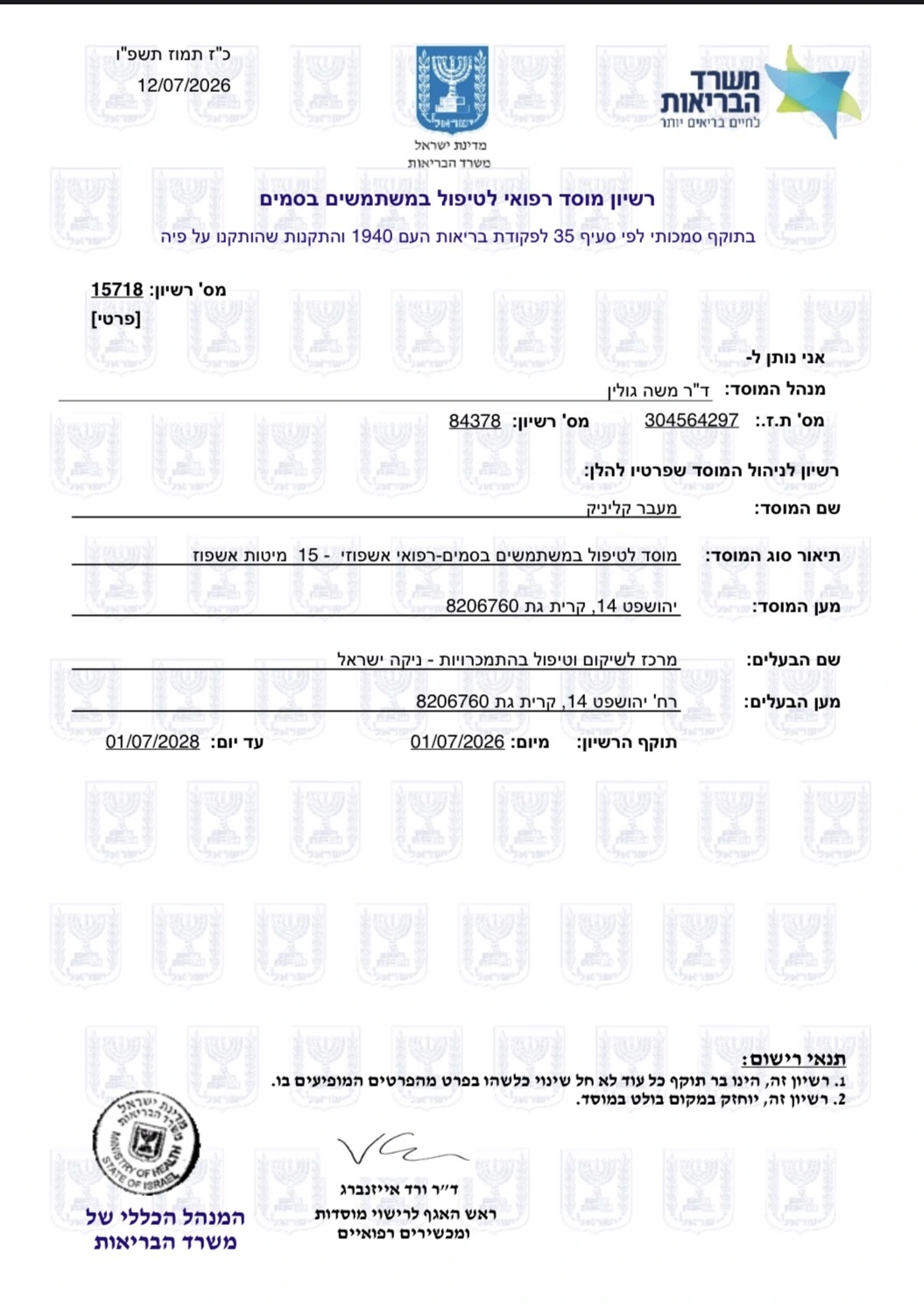
No. DIAMANT HOUSE is not a medical clinic. It does not diagnose, prescribe medication or perform detox. Diagnosis, detox, medication, emergency care and clinical decisions are carried out only by licensed professionals and medical institutions in Israel.
How is this page different from an opioid treatment page?
This page focuses on recognizing opioid addiction, the family pattern and overdose risk. A treatment page focuses on the route of help: provider coordination, privacy, logistics, medical tourism and recovery planning.
Why is one promise to stop usually not enough?
After a crisis, the person may genuinely mean it. But withdrawal, pain, access, shame, debt, old contacts and family panic can pull the same cycle back into place. A promise without a route often collapses under pressure.
Can the process stay private?
Yes. A private route can use a limited circle of information, discreet logistics and careful family communication. Privacy should never delay emergency medical care when overdose or breathing problems are possible.
How can we contact DIAMANT HOUSE discreetly?
You can write on WhatsApp: https://wa.me/972547578876. Briefly describe what opioid is known or suspected, whether there were breathing problems, unconsciousness, mixed use, debts, aggression, withdrawal and the current level of risk at home.
If opioids are already controlling sleep, money, behavior and safety, do not wait for the next crisis
Write briefly what is known: heroin, methadone, tramadol, fentanyl, pain pills, oxy or an unknown substance; when the last episode happened; whether there were breathing problems, unconsciousness, withdrawal, mixed use, debt, aggression or fear at home.
DIAMANT HOUSE coordinates a private route in Israel around licensed professionals, medical tourism, logistics, translation, confidentiality, family communication and recovery planning.
WhatsApp: https://wa.me/972547578876
Phone: Call
Email: dhvny8@gmail.com