Medical authority
Risk assessment, diagnosis, detoxification, medication, stabilization, and psychiatric decisions stay inside the licensed medical team.
Meet the MAAVAR CLINIC medical and recovery team in Kiryat Gat and understand who is responsible for each stage of addiction treatment.
Families do not need a collection of job titles. They need to know who evaluates risk, who makes medical decisions, who organizes admission, and who keeps the recovery process moving after the acute crisis has settled.
MAAVAR CLINIC brings those responsibilities into one coordinated system in Kiryat Gat. The medical stage is led by Dr. Moshe Golin and the medical team; the admission and continuity route is supported by Andrey; the wider rehabilitation team builds structure, accountability, family boundaries, and long-term recovery skills.
Addiction care becomes unsafe when medical, practical, and family responsibilities blur together. At MAAVAR CLINIC, each stage has a defined owner and the stages remain connected.
Risk assessment, diagnosis, detoxification, medication, stabilization, and psychiatric decisions stay inside the licensed medical team.
Confidential intake, admission logistics, family communication, and continuity are organized without replacing the physician.
After stabilization, the focus shifts to behavior, routine, responsibility, relationships, triggers, and sustainable daily living.
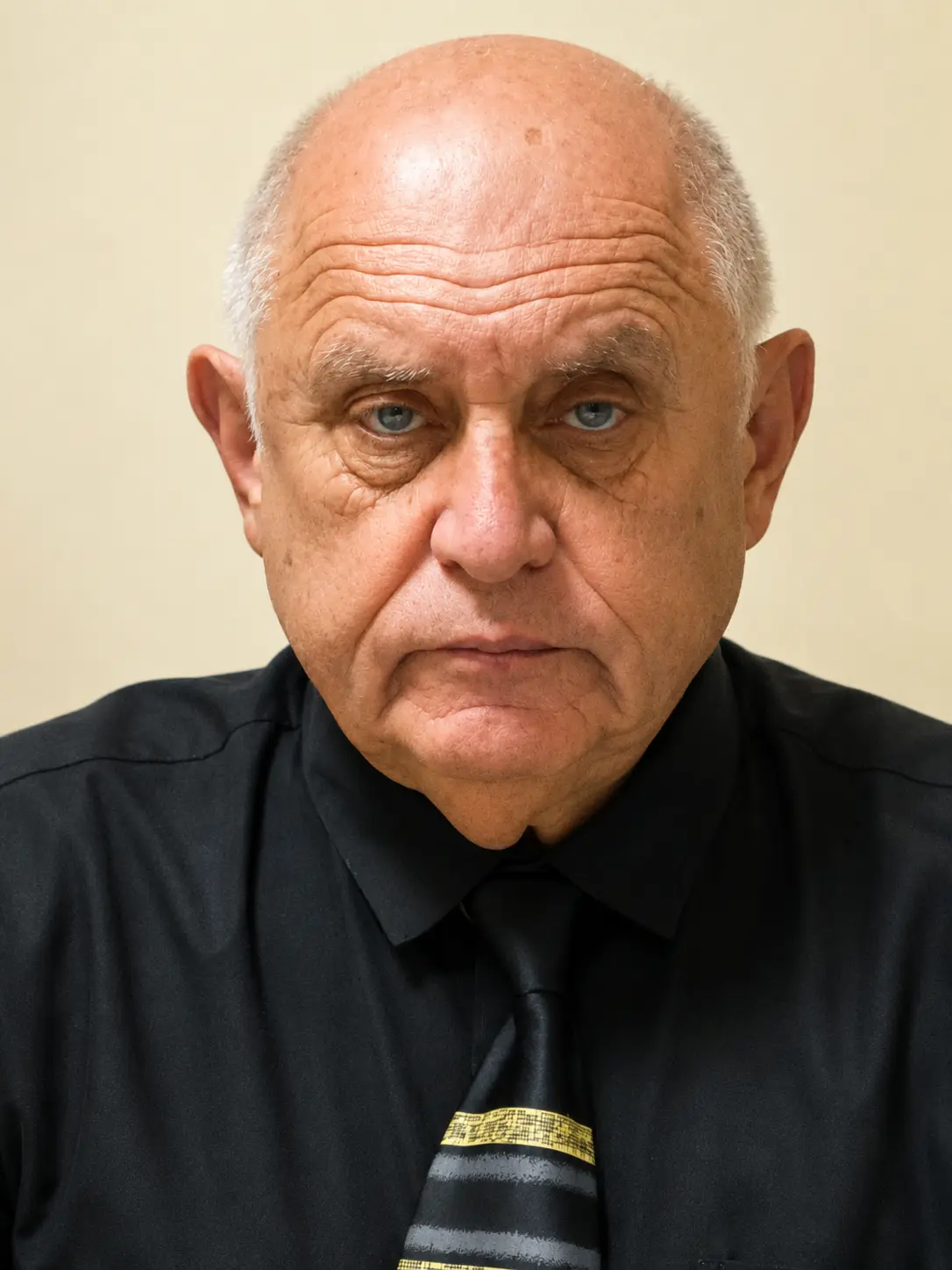
Psychiatrist, addiction physician, senior doctor with 40 years of experience
Dr. Golin leads the medical and psychiatric assessment at MAAVAR CLINIC. He evaluates substance use, withdrawal risk, physical health, psychiatric symptoms, medication interactions, previous complications, and immediate safety concerns.
He and the medical team are responsible for diagnosis, dual-diagnosis evaluation, detoxification planning, stabilization, medication decisions, hospitalization decisions when relevant, and clinical supervision under the clinic’s Ministry of Health license.
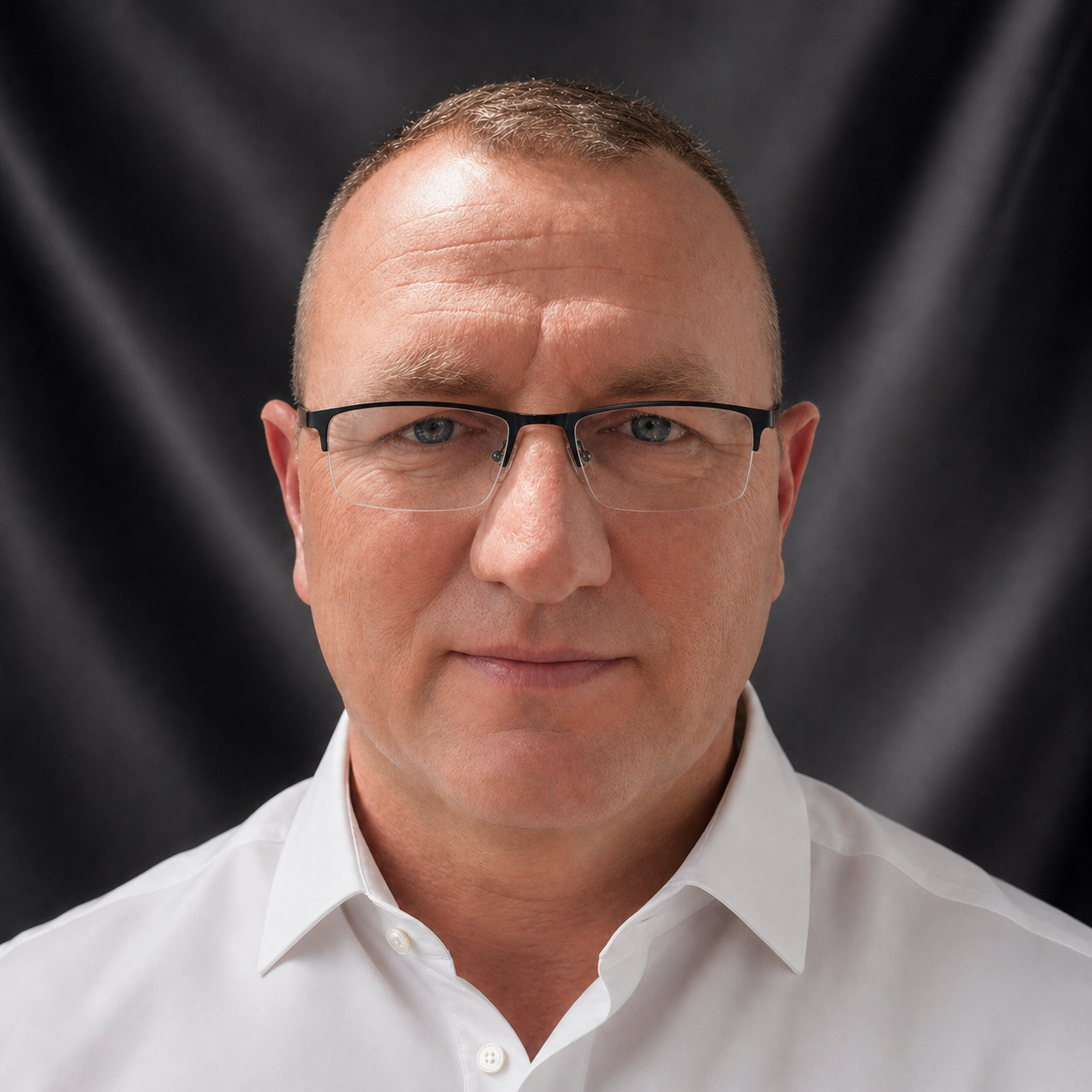
Confidential admission, treatment route, logistics, and family coordination
Andrey helps turn a difficult first call into a workable route. He gathers the practical information needed for admission, protects confidentiality, explains the sequence of stages, and keeps communication clear between the patient, the family, and the clinic.
He is not a physician. He does not diagnose, prescribe medication, determine detoxification protocols, or make clinical decisions. His responsibility is practical continuity: helping the family understand what happens next and preventing avoidable gaps between stages.
The people below work alongside the medical team but do not replace it. Their roles cover confidential admission, daily structure, mentoring, family boundaries, communication, and the practical work of returning to a stable life.
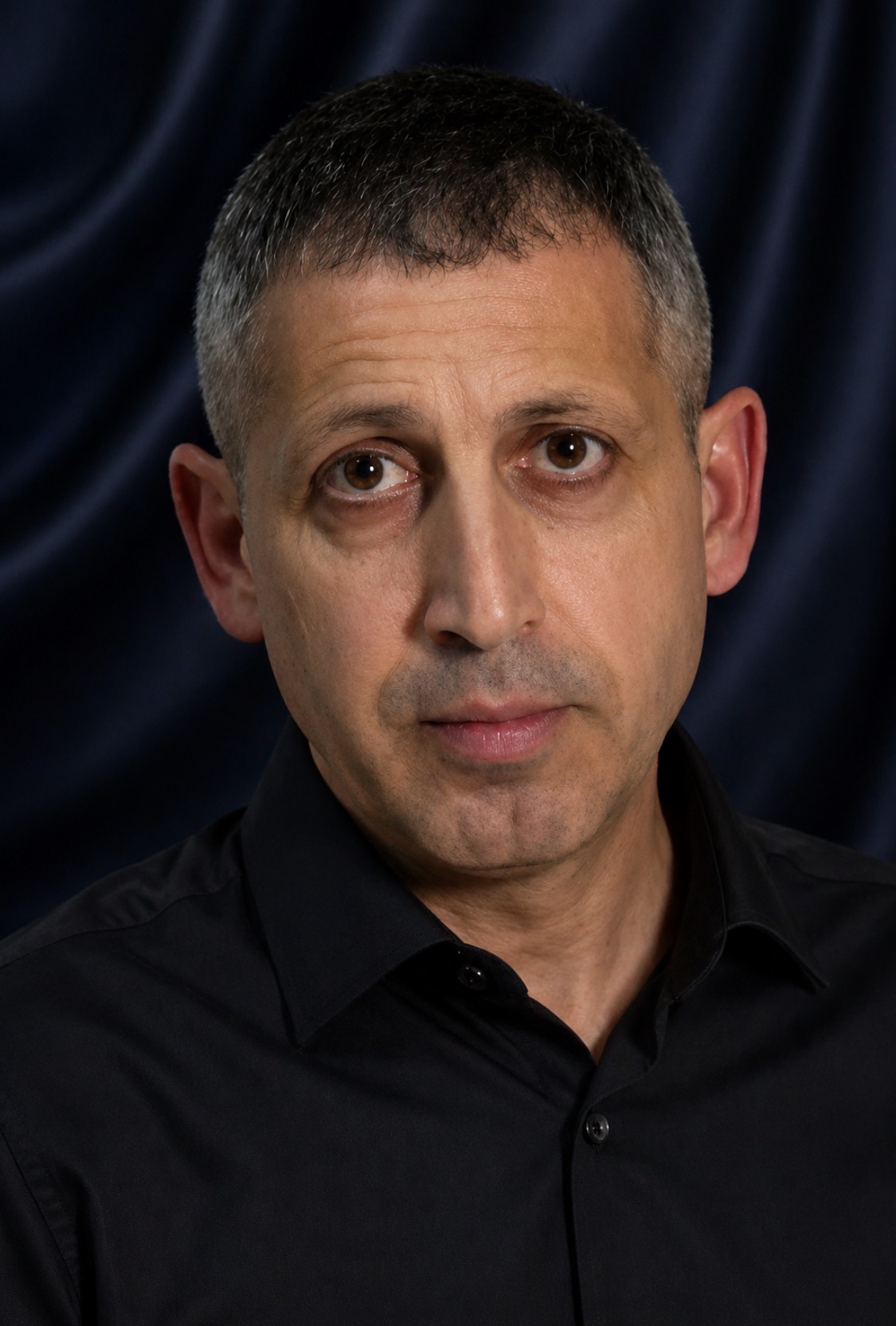
Recovery mentor • daily structure • learning • responsibility
Mikhail helps patients rebuild the ordinary disciplines that addiction gradually removes: getting up on time, sleeping at consistent hours, participating in the program, completing tasks, speaking honestly, and tolerating discomfort without escaping into use.
His role is practical and rehabilitative. He supports repetition, accountability, learning, and day-to-day functioning after medical stabilization. He does not diagnose, prescribe medication, conduct detoxification, or make clinical decisions.
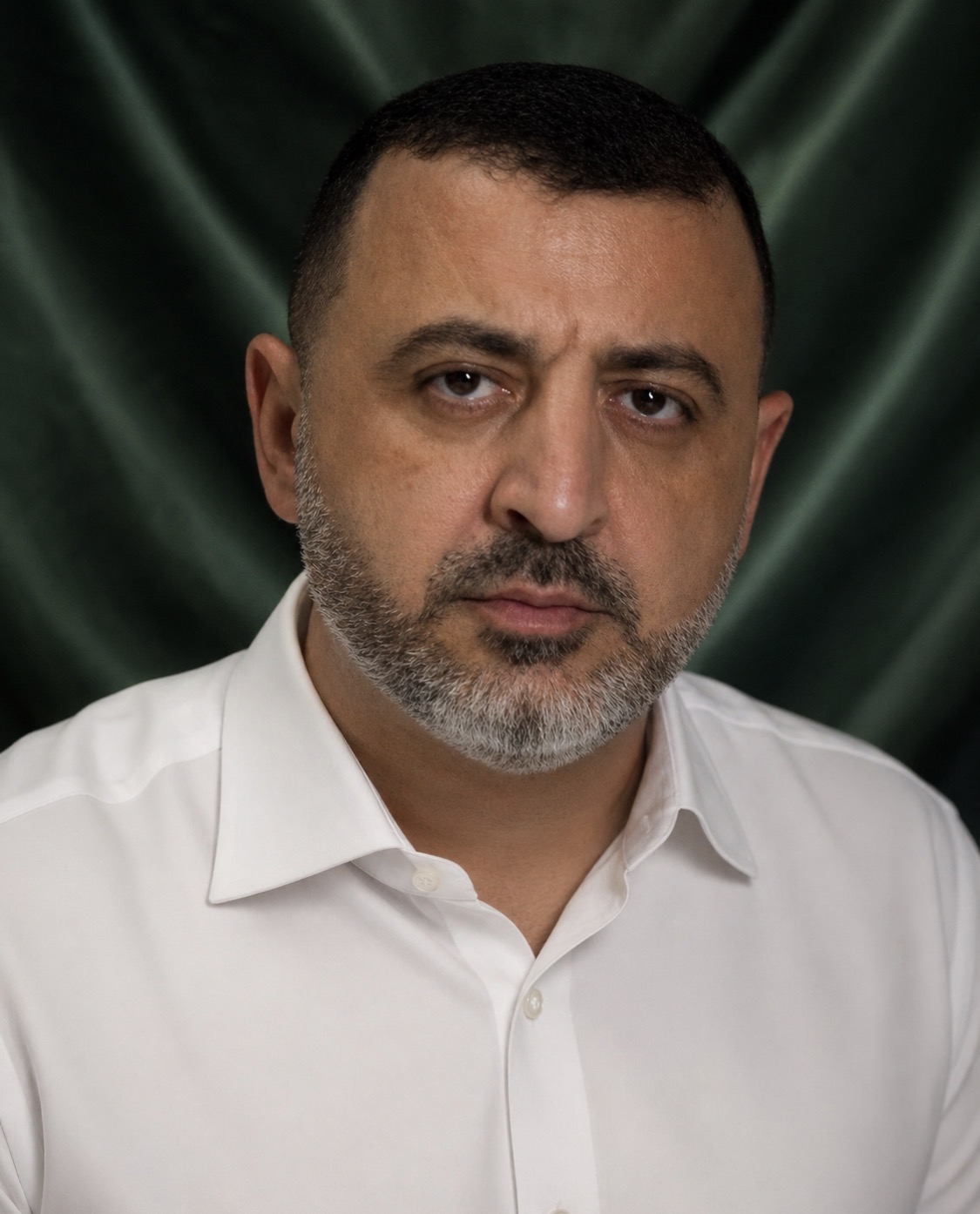
Recovery mentor • motivation • transitions • boundaries
Ramiz works with the points at which recovery often weakens: the move from crisis into routine, the gap between intention and action, difficult family conversations, and the early warning signs that appear before relapse.
He supports motivation, personal responsibility, 12-step work, thinking patterns, and continuity between stages. He is a mentor rather than a physician and does not make medical or medication decisions.

Recovery instructor • adaptation • communication • family support
Karin supports the emotional and social transition into recovery. Her work includes communication during crisis, participation in the group environment, adaptation to clear limits, and the gradual rebuilding of confidence and everyday stability.
She also helps families communicate with less panic and greater consistency. Karin is not a physician: she does not diagnose, prescribe or discontinue medication, perform detoxification, or make clinical decisions.
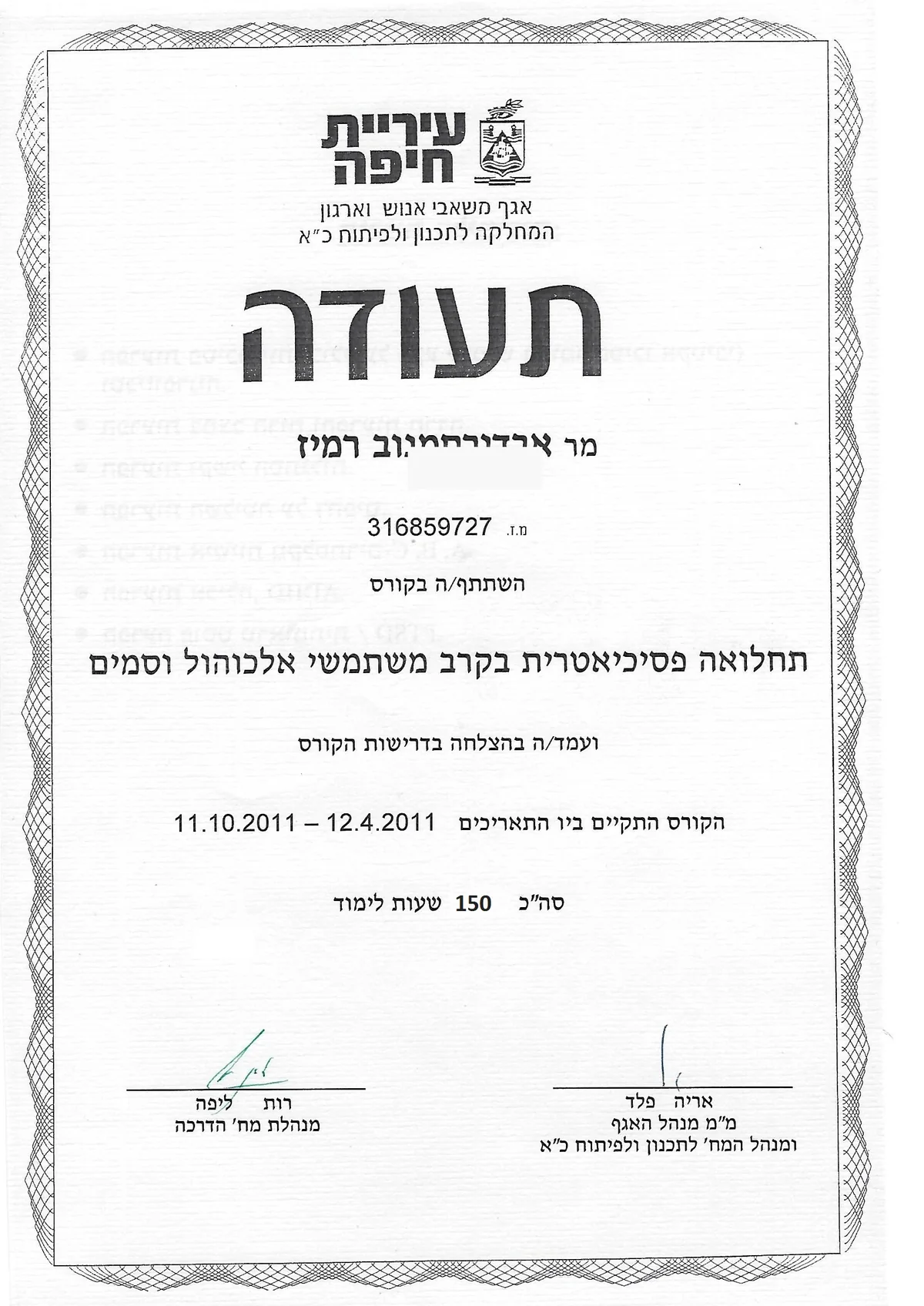
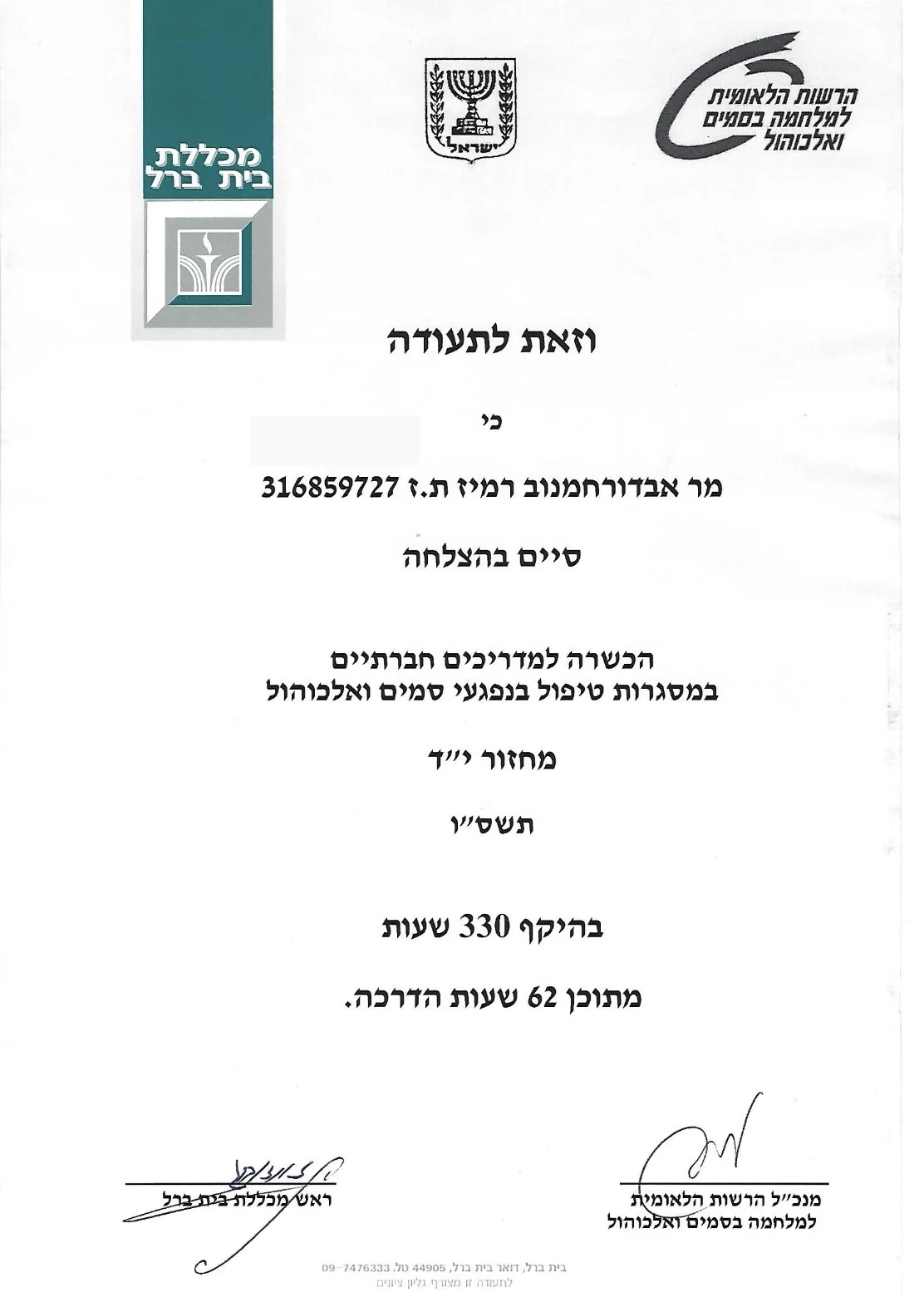
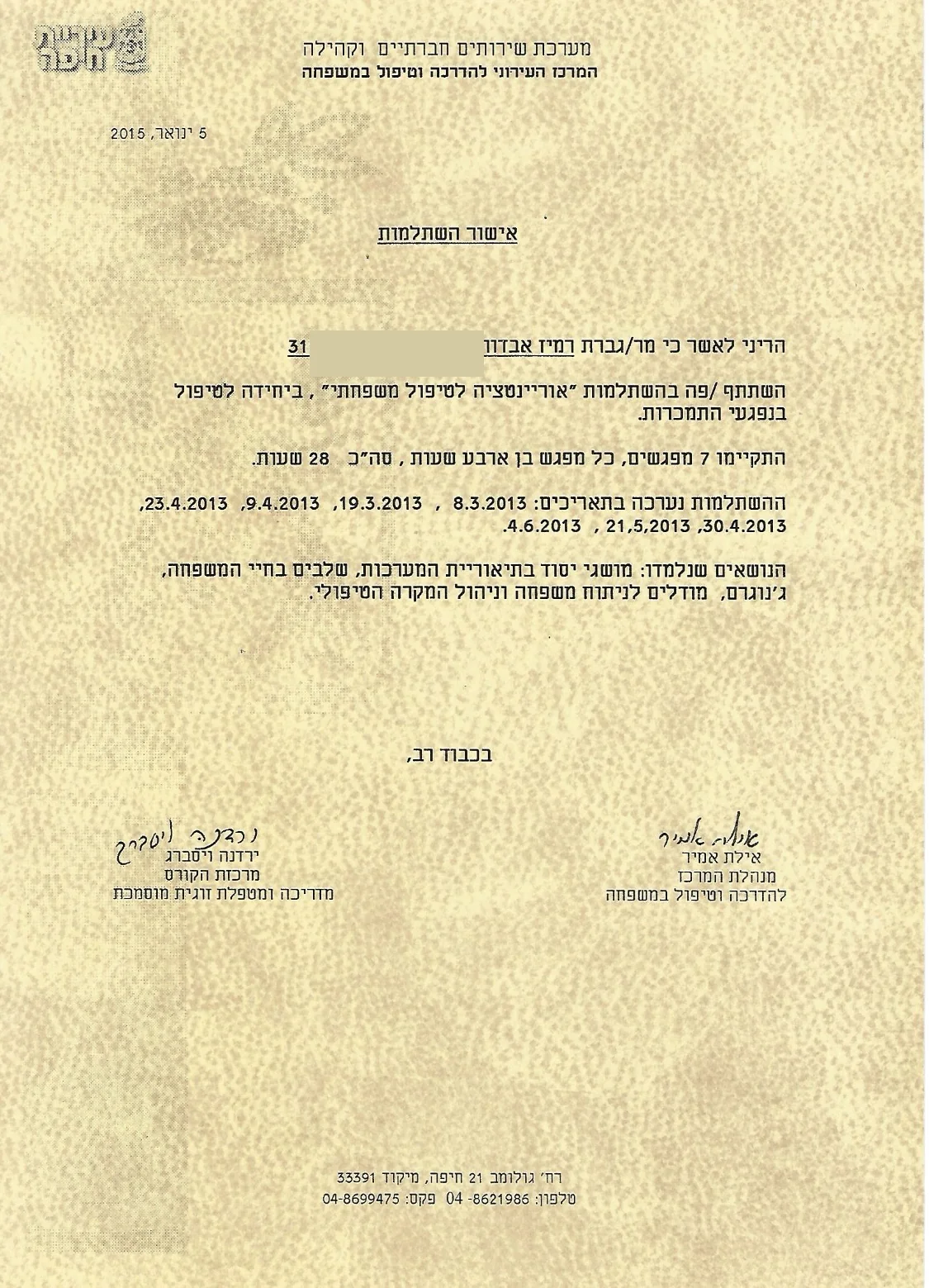
These documents provide transparency about training connected with 12-step work, group facilitation, municipal and therapeutic settings, harm prevention, psychiatric comorbidity, social support, and family-oriented practice. They do not grant medical authority and do not replace the clinic’s Ministry of Health license.
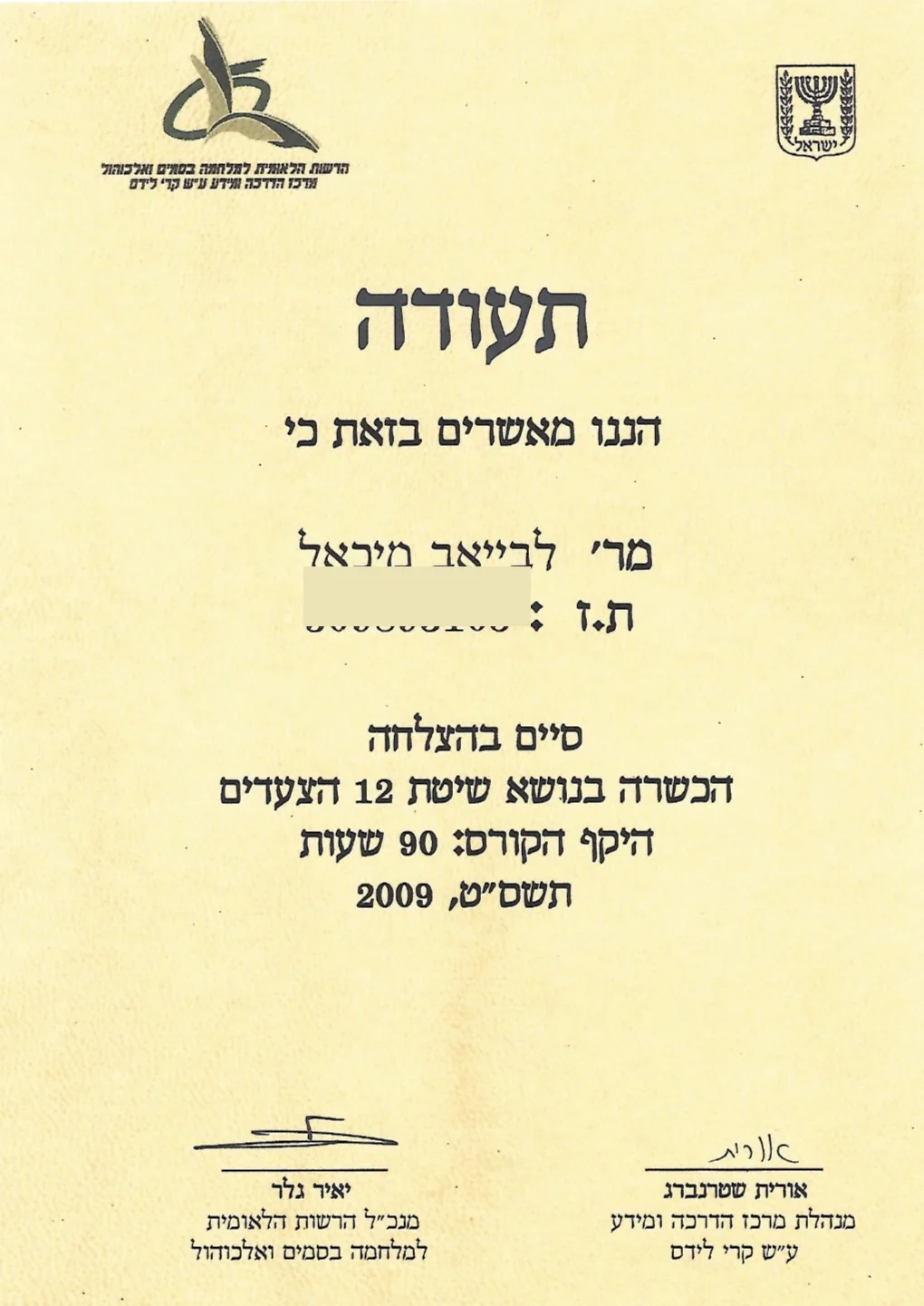 12-Step ProgramTraining related to the 12-step recovery model, 2009.
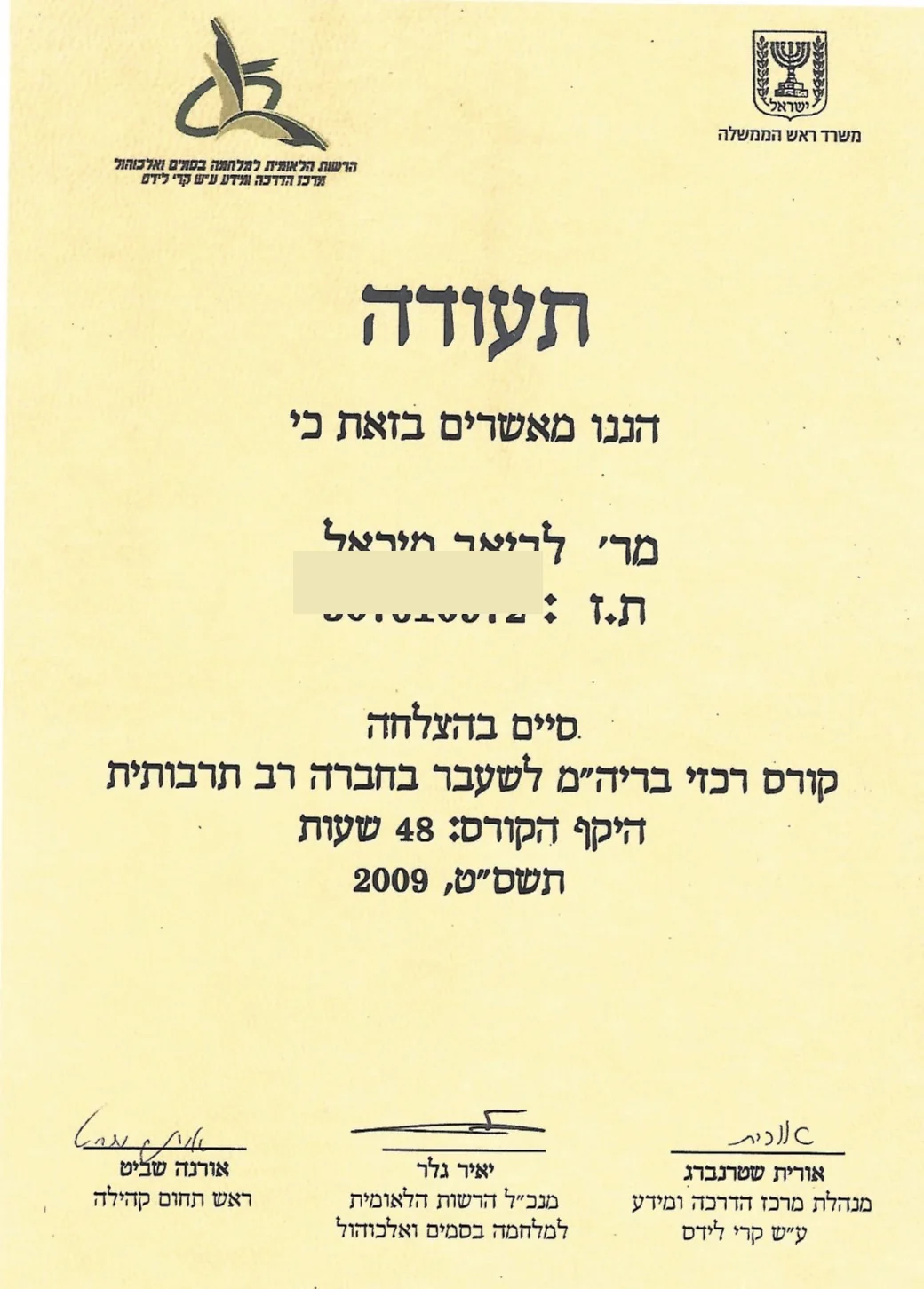 Group FacilitatorTraining in structured group facilitation, 2009.
 Local AuthoritiesPreparation for work in a municipal context, 2007.
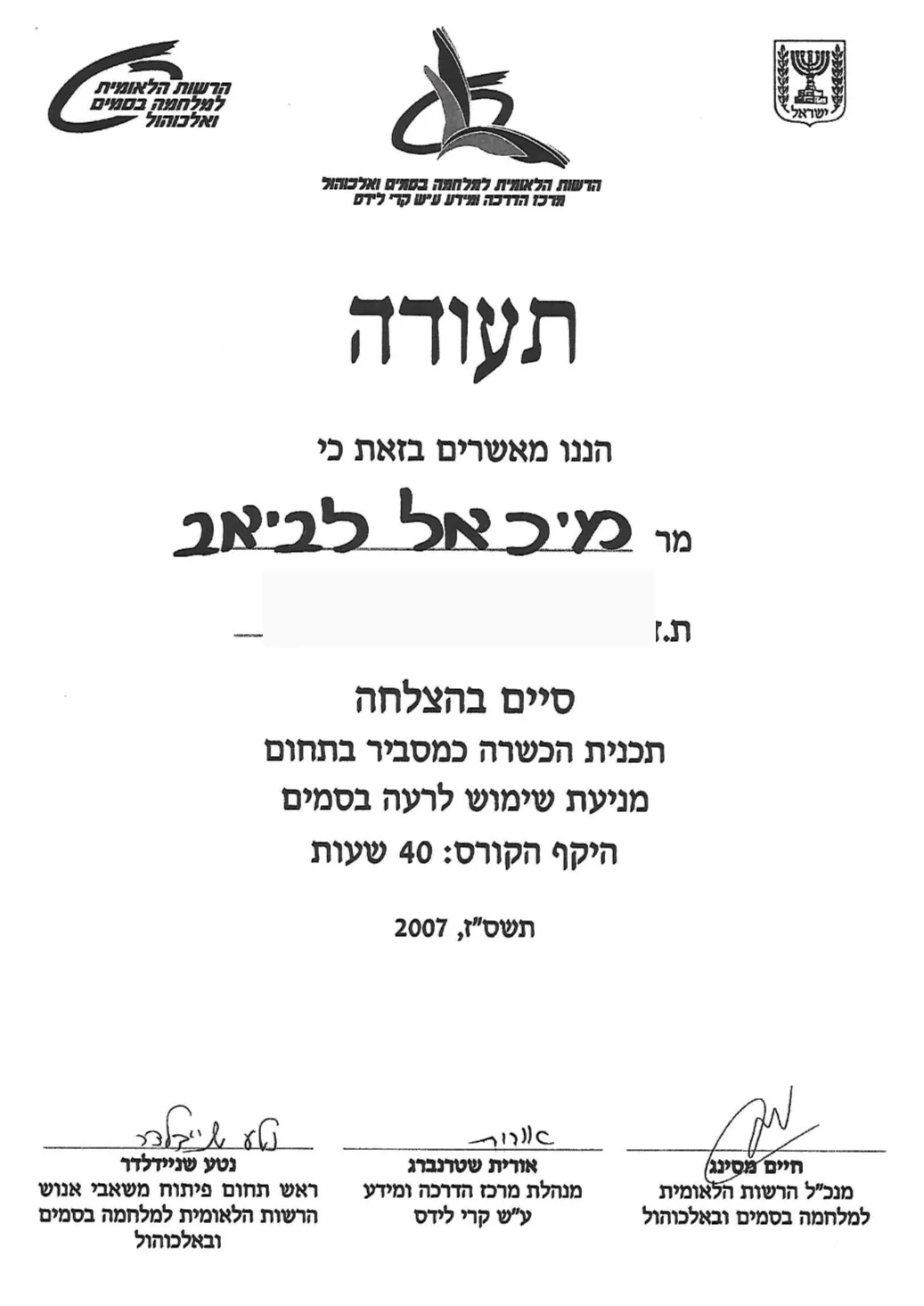 Drug-Harm PreventionTraining related to reducing harm associated with substance use, 2007.
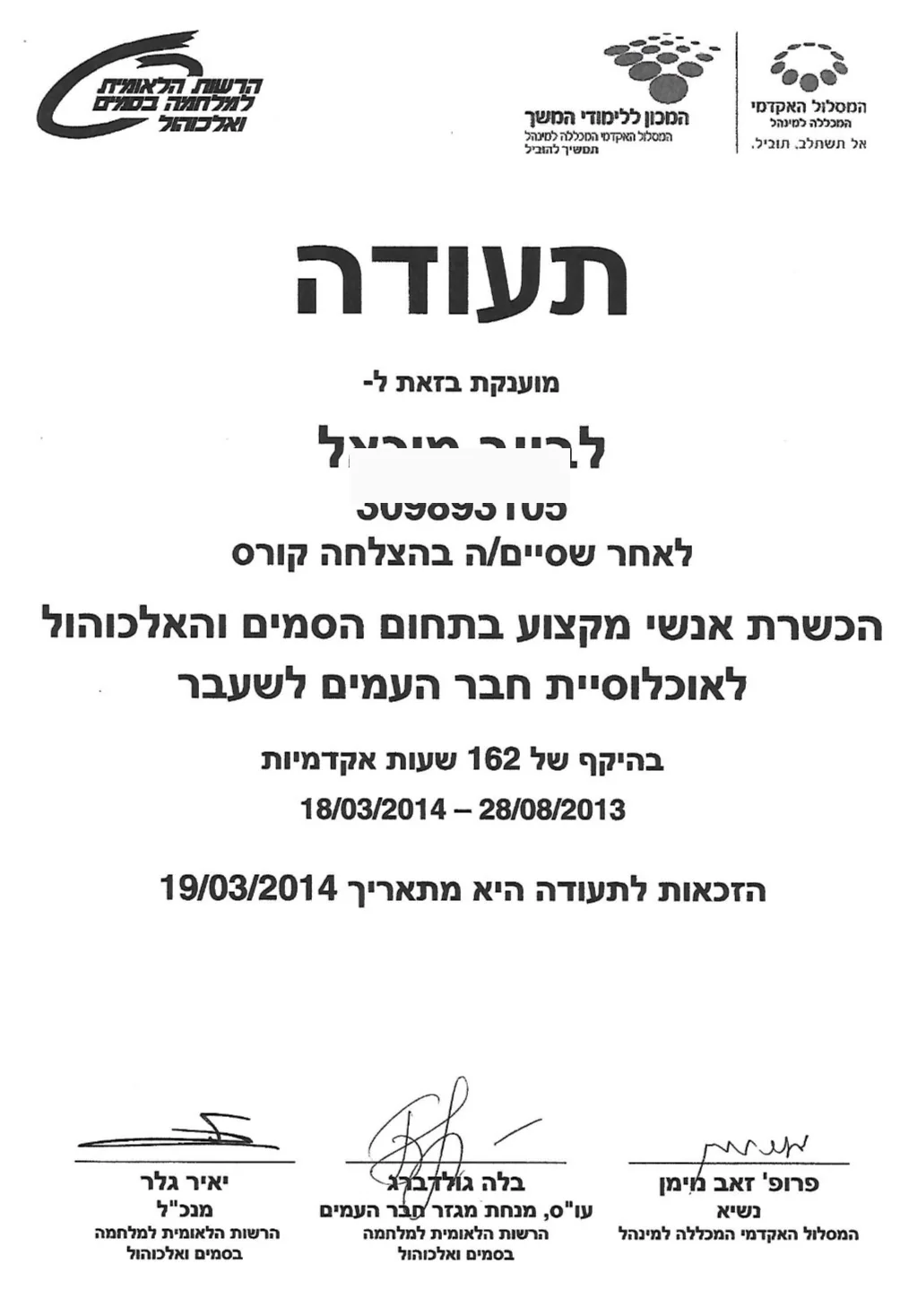 Professional TrainingSpecialist development in alcohol- and substance-related work, 2014.
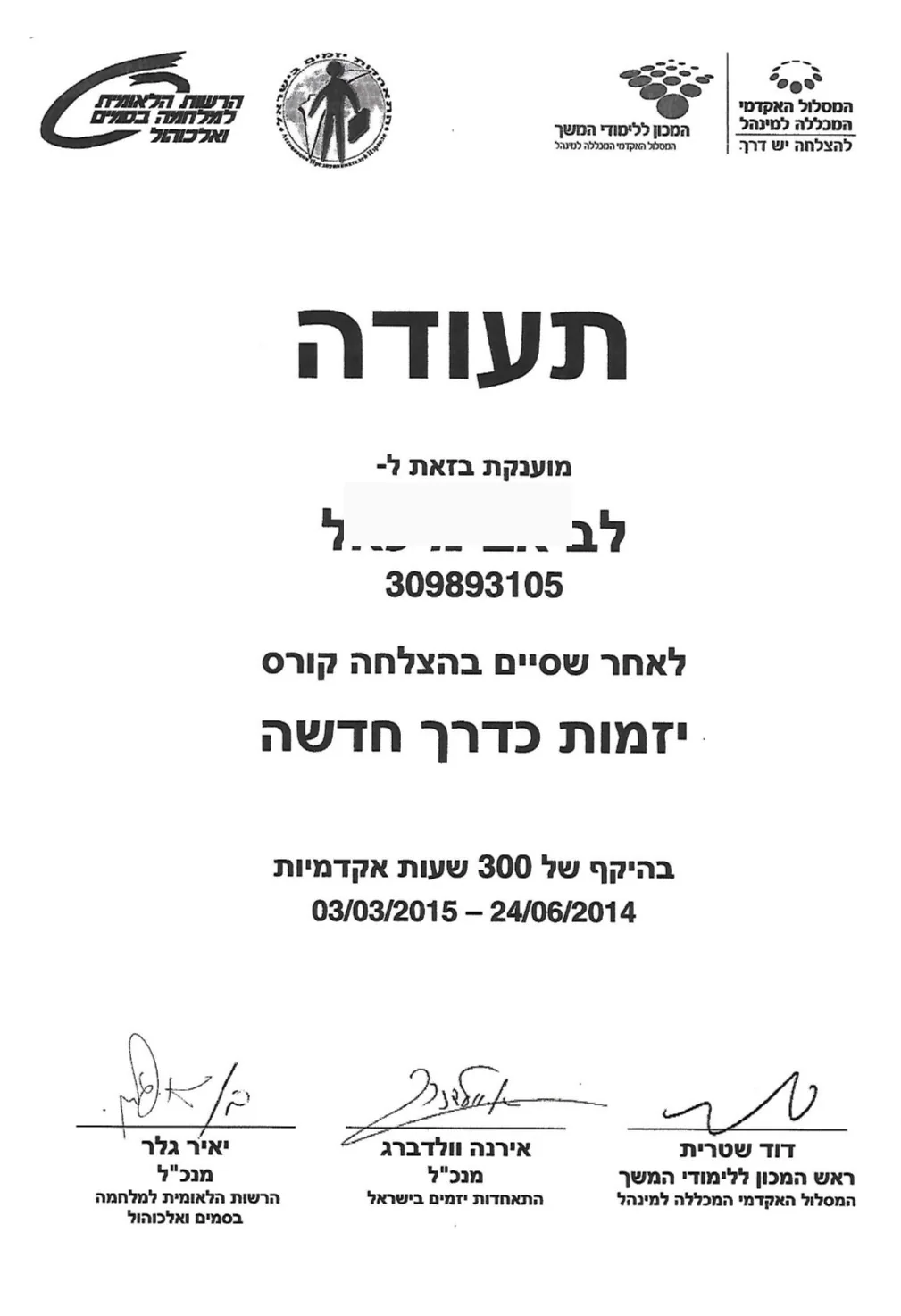 New WayExtended professional development, 2015.
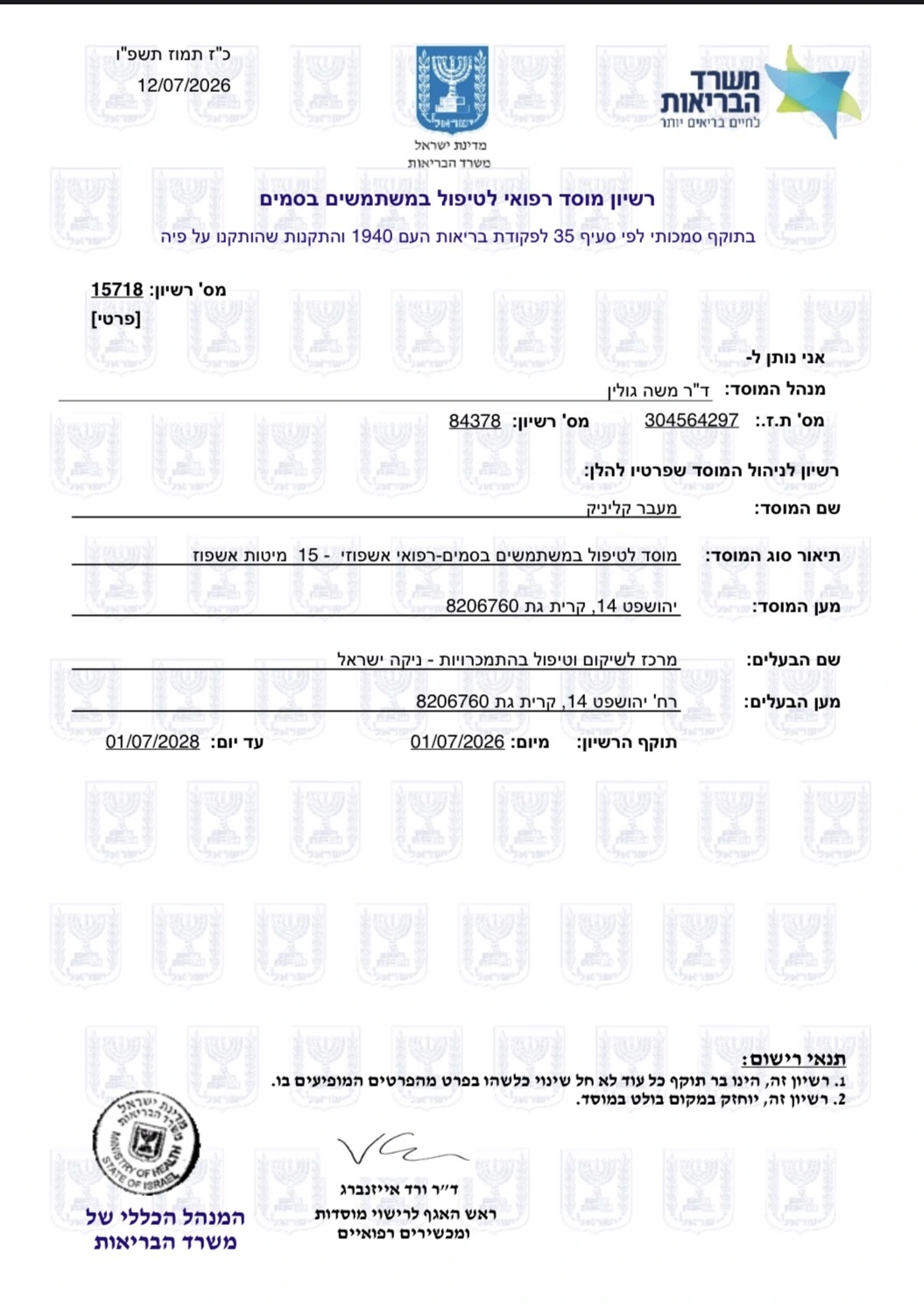
The current license documents the clinic’s authorized medical status for the 2026–2028 licensing period. It is separate from the mentors’ training documents because medical authority and rehabilitation qualifications are not interchangeable.
Non-medical team members support recovery, but they do not replace the psychiatrist-addiction physician or the medical team.
The first conversation should establish urgency, medical risk, the current pattern of use, and the practical conditions for a safe next step.
The substance or medication, typical amount, last use, mixed use, current symptoms, fixed medications, and previous complications.
Whether the situation is urgent, what information to prepare, what not to promise, and how admission connects to the full rehabilitation program.
Once the acute medical picture is stable enough, the main work begins inside a structured therapeutic environment.
Patients learn to identify denial, impulsive decisions, avoidance, and the internal logic that repeatedly leads back to use.
Sleep, meals, participation, personal care, commitments, and daily accountability are rebuilt through repetition.
Communication, boundaries, triggers, warning signs, and practical responses are prepared before the patient returns to ordinary life.
The wider rehabilitation team supports the part of treatment that cannot be completed by medication alone.
Families are often exhausted by repeated promises, emergencies, and rescue attempts. They need a plan that is compassionate and consistent.
The family shares accurate information about use, medications, psychiatric changes, previous incidents, and what is happening at home.
Support is separated from financing use, hiding consequences, supplying medication without instruction, or negotiating during a crisis.
Short, planned conversations replace circular arguments, threats, and last-minute bargaining.
The family learns what must change after discharge and which warning signs require an immediate response.

A person can look calmer after several days and still be at high risk of returning to the same pattern. The team’s task is to prevent the medical stage, the rehabilitation stage, and the family plan from becoming disconnected events.
Families may receive mixed messages about diagnosis, medication, detoxification, and immediate safety.
Diagnosis, detoxification, medication, stabilization, psychiatric assessment, and clinical safety remain with the physician and medical team.
Urgent calls, practical arrangements, and family expectations can become fragmented or delayed.
Confidential contact, practical logistics, family communication, and continuity between stages are organized in advance.
The person may return to the same routines, triggers, family dynamics, and decision patterns that supported continued use.
Routine, behavior, responsibility, family boundaries, trigger management, 12-step work, and relapse prevention become daily practice.
These sources provide general context and do not replace an individual medical assessment.
Yes. MAAVAR CLINIC operates as a licensed medical structure in Kiryat Gat. Medical assessment, diagnosis, detoxification, stabilization, medication, and clinical decisions are performed by the psychiatrist-addiction physician and medical team under the Israeli Ministry of Health license and clinical indications.
Dr. Moshe Golin leads psychiatric and addiction-medicine assessment. He is responsible for diagnosis, withdrawal-risk assessment, detoxification planning, stabilization, medication decisions, dual-diagnosis evaluation, and clinical supervision.
Andrey coordinates confidential first contact, the admission route, practical logistics, family communication, and continuity between treatment stages. He does not diagnose or make medical decisions.
Mikhail supports daily structure, sleep habits, responsibility, learning, participation, and practical recovery steps after medical stabilization. He is a recovery mentor rather than a physician.
Ramiz works with motivation, 12-step principles, thinking patterns, transitions between stages, family boundaries, and early relapse warning signs. He does not make clinical decisions.
Karin supports adaptation to the rehabilitation environment, communication, family guidance, group participation, internal stability, and the gradual return to daily life. She is not a physician.
Yes. This page displays the professional documents supplied for Mikhail and Ramiz, including training connected with 12-step work, group facilitation, harm prevention, psychiatric comorbidity, social support, and family-oriented practice.
Yes. The current MAAVAR CLINIC Ministry of Health license for the 2026–2028 licensing period is displayed on this page and can be opened in a larger view.
No. Medical assessment, diagnosis, detoxification, stabilization, medication, hospitalization decisions, and clinical strategy remain with Dr. Moshe Golin and the licensed medical team.
Write through WhatsApp, call +972 54 757 8876, or email dhvny8@gmail.com. Initial contact is handled discreetly.
Share the substance or medication involved, the last use, current symptoms, previous treatment, fixed medications, and any history of seizures, severe confusion, psychosis, overdose, or self-harm.
This information helps the clinic distinguish an emergency from a planned admission and connect the medical stage with the rehabilitation stage from the outset.
Quick reading settings for this page.